Kleenex & Harvard GSD
2026
Revitalizing the champion of facial tissue
Designing a new product line and brand system for Kleenex after its parent company divested its international sector.
Overview
Innovating Kleenex's product and brand strategy
As Project Lead, I coordinated a 11-person team (pitch narrative, industrial design, UX, 2D/3D rendering) to design Kleenex Aroma, a new product line that helps Kleenex stay competitive after its parent company Kimberly-Clark divested its international sector in 2025. Backing up this new product initiative is a system of brand strategy, digital interface, and visual assets. We also proposed a product launch timeline with a breakdown of actions and north-star goals.
My Contribution
Translated guest critic and faculty feedback into roadmap and actionable tasks after weekly pitches.
Ran regular check-ins throughout the week to track team alignment, surface friction points, and ensure materials handed off smoothly between strategy, design, and production.
UX design: read more about my process here ↗.
Outcome
Our project was awarded Distinction by Harvard GSD Faculty, and received endorsement by Michael Peng, CEO of IDEO, as well as senior design leaders at Nike and Coca-Cola.
Problem
A trusted legacy brand, boxed into one moment
For over 100 years, Kleenex has been the go-to when people are sick and owns the "soothing for sickness" mission. But now, this positioning is oversaturated by other facial tissue competitors, and this category has gone financially stagnant. Because of this, Kimberly-Clark sold a majority of its Kleenex businesses outside North America to Brazilian company Suzano for $3.4 billion. Our team conducted research on this deal and synthesized 3 reasons driving this divestment.

Sources: Wall Street Journal (2025); Reuters (2025); Statistica (2024)
Research
Finding the whitespace
Core Issue: Kleenex is a reactive product. Consumers only buy it after they're already sick. This creates steep seasonal demand that only spikes in cold-and-flu season, but collapses the rest of the year.
Opportunity: To make Kleenex relevant all-year-round, the strategic move is to break the stigma of sickness that people associate tissue with. Move Kleenex from a hygiene necessity to a lifestyle companion — one that owns everyday comfort, not just illness.
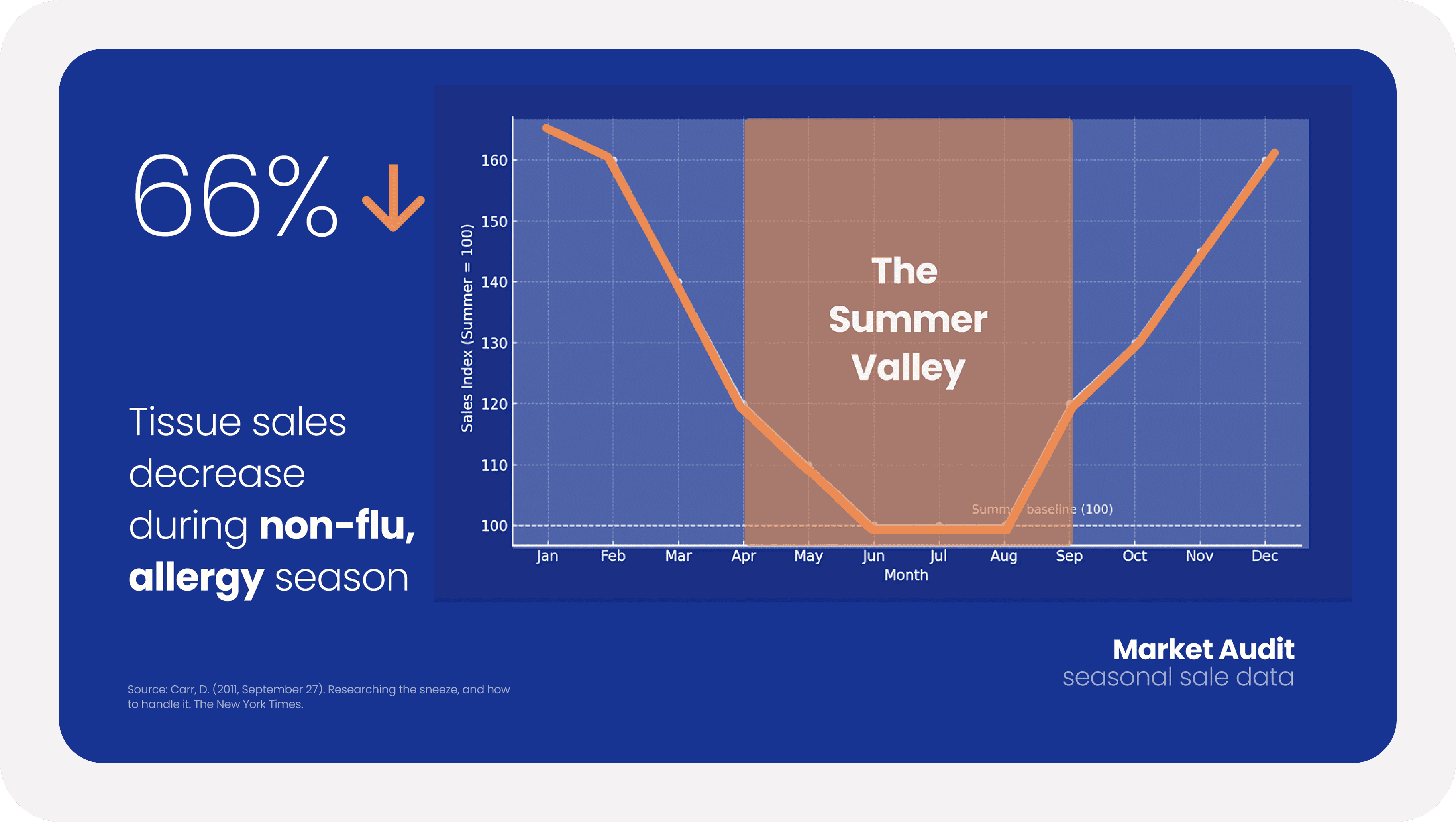
Source: Carr, D. for the New York Times (2011).
Competitive Audit
Studying competing facial tissue brands in physical market shelves and e-commerce platforms helped us summarize that existing brands cluster primarily around three territories: functionality, emotional support, and sustainability. None of them own wellness as a broader territory, which is projected to reach ~56% by 2035 (National Center for Complementary & Integrative Health, 2025). That's a profitable market and a unique gap Kleenex can expand into.

Sources: Star Market (field research), Amazon, Target, product official websites.
Cultural Tension
Social media audit surfaced 2 opposing currents: hustle culture ("5–9 before 9–5") on one side, and a growing pull toward rest and softness (#softlife, #cozymaxxing) on the other. As stress and anxiety are rising generationally, and wellness rituals are becoming daily habits, this tension is fueling a category growth with high potential.

Sources: 40 reels from Instagram, TikTok, YouTube, Rednote.
Aromatherapy as the entry point
This specific category within the wellness market is projected to hit $15.2B in 5 years, with a loyal, repeat-purchase base willing to pay a premium for natural, simple products, making it the most ideal choice for Kleenex to adopt.
But we found that existing scent products (candles, diffusers, incense) share a common flaw: they're messy, not portable, and anchor people to their homes.

Sources: 40 reels from Instagram, TikTok, YouTube, Rednote.
Key insights
Through our research, we determined the preliminary direction that Kleenex should merge aromatherapy's calming appeal with portability, quality, and ease. This allows the Kleenex to move beyond a static box into something that travels with people's routines.
Kleenex is currently a reactive product tied to the "sickness" brand perception.
Consumers in the hustling culture crave easy, accessible wellness rituals.
Competitive audit reveals Aromatherapy as a viable wellness category to expand into.
Adapt Aromatherapy's calming appeal while enhancing portability, quality, and ease.
Strategy
Bringing wellness rituals to "Glow Getters"
Our target, the Glow Getters, are people constantly in motion: professionals, parents, creatives who are balancing career, caregiving, and self-growth. They look composed but carry quiet stress, and they're looking for small, grounding rituals throughout the day.
The positioning shift
By introducing a new Aromatherapy-based product line, Kleenex moves from reactive (relief when you're sick) to proactive (a wellness ritual, personal and grounding). We leverage its heritage as permission to expand beyond the tissue aisle into self-care and lifestyle.
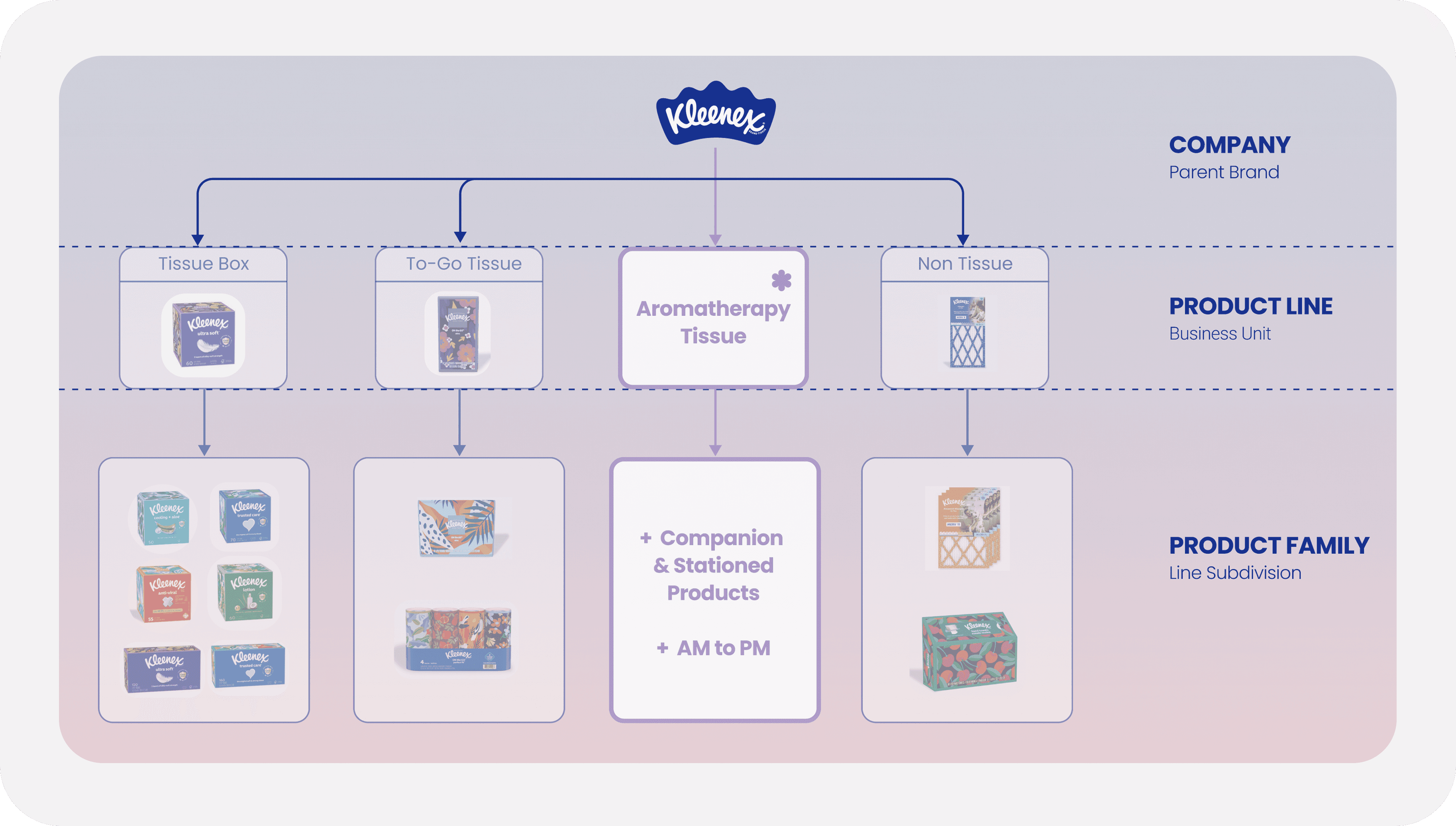
A new product line built around 3 states of mind
Each is expressed through its own essential-oil blend, and together they form a cohesive franchise designed to meet Glow Getters across different moments of their day.

Solution
Kleenex Aroma
The final redesign focused on improving clarity across everyday financial tasks through stronger hierarchy, simplified navigation, and more contextual transaction feedback. The updated interface made balances easier to compare, actions easier to locate, and activity flows easier to understand at a glance.
Product rendering: Leah Bian
Physical prototyping & manufacturing: Alex Limber
Product 1 — Aroma Mist Pack
A compact, refillable spray-and-tissue system. Swap scent cartridges to shift rituals throughout the day. Glide, spray, breathe. Mist packs use naturally-derived, phthalate-free fragrance in compostable shellfish-bioplastic casing.
C4D video: Leah Bian
Product 2 — Aroma Pop Pack
A single essential-oil bead that turns any tissue into an instant aromatherapy moment. Grab, pop, breathe. Available as a portable companion or a home station. Pop pods are made from regenerative, biodegradable materials in pressed-pulp packaging.
C4D video: Leah Bian
Brand Identity & Visual Assets
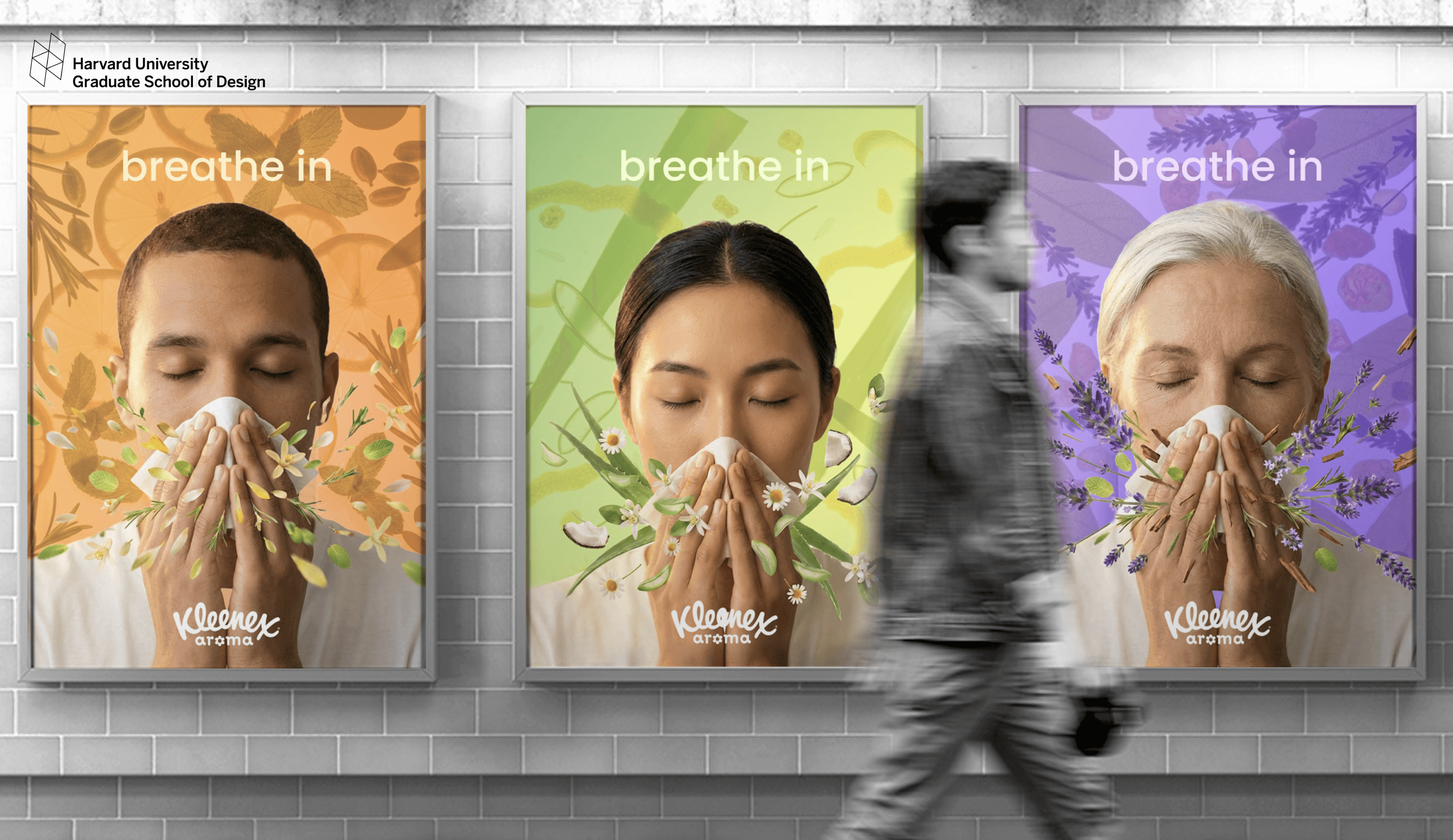
3 scents corresponding to the 3 core mindsets. Adobe Illustrator images: Robyn Wang
Figma animation: me and Anyang Zu
Figma animation: me and Anyang Zu
Visual asset system: Anyang Zu
Go-To-Market
Profit margin calculation: Haolei Zhang
Physical shelf rendering: Chloe Ni
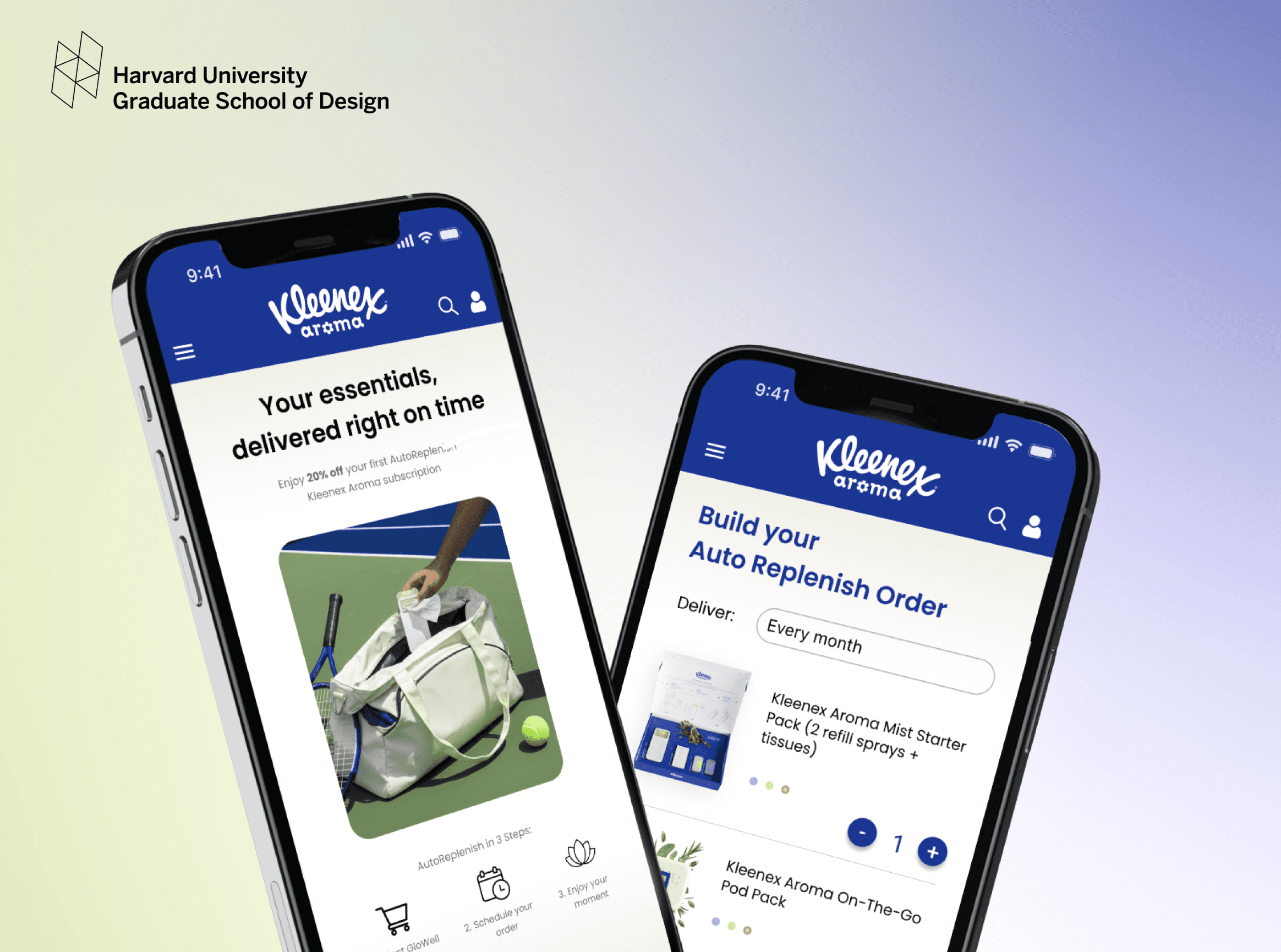
Subscription prototype: me
Subscription package rendering: Chloe Ni
Pop-up store rendering: Robyn Wang, Jerry Zhang
Go-to-market timeline: Haolei Zhang
Lessons
Leading means creating equality, not directing
Leading this cross-functional team taught me that good collaboration begins with understanding my teammates' perspectives and motivations. Trust unlocks innovation. My role was not dictating solutions, but amplifying diverse expertise and emotional security, and jumping in where work is needed.
Key Takeaways
Quickly determine priority
With weekly feedback and limited time, I identified the highest-impact tasks in each category and assign according to teammate availability.
Balance critique with momentum
I opened each debrief by recognizing what worked before what needed to change, keeping the team motivated under a fast pitch cycle.
Empathy and action resolve conflicts
When friction among teammates surface, I offered emotional understanding and solutions to focus on the problem, not the individual.
Don't take criticism personally
When given a negative comment, I focus on the substance, not the emotion. Critique contributes to success.