Overview
Context
Problem
Source:
Forbes Tech Council (2024) on challenges of adopting subscription.
Harvard Business School (2023) on subscription and consumer alienation.
Outcome
Takeaways
Insight
Design Decision 1:
Design Decision 2:
Method:
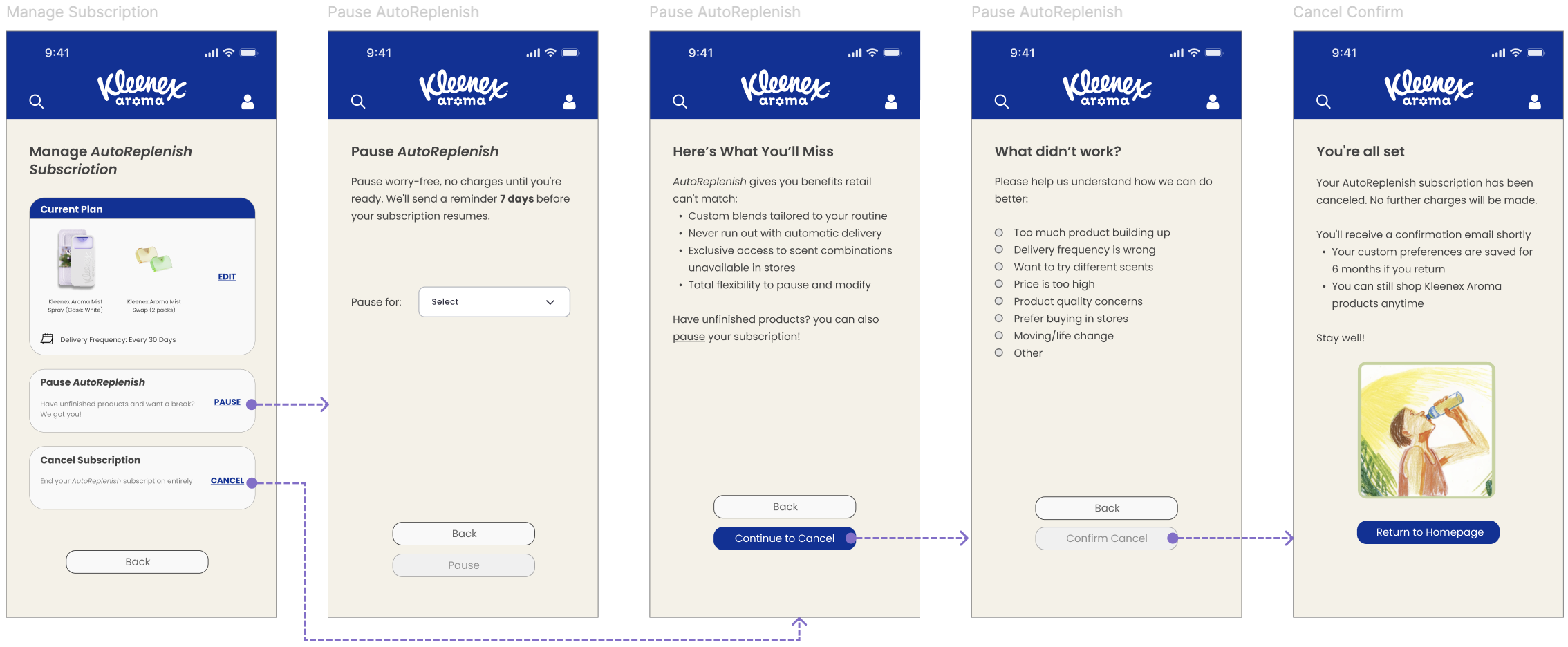
Prototyped 4 distinct “cancel” flows, finalized 2
Design Decision 3:
Method:
Testing usability with 10 users
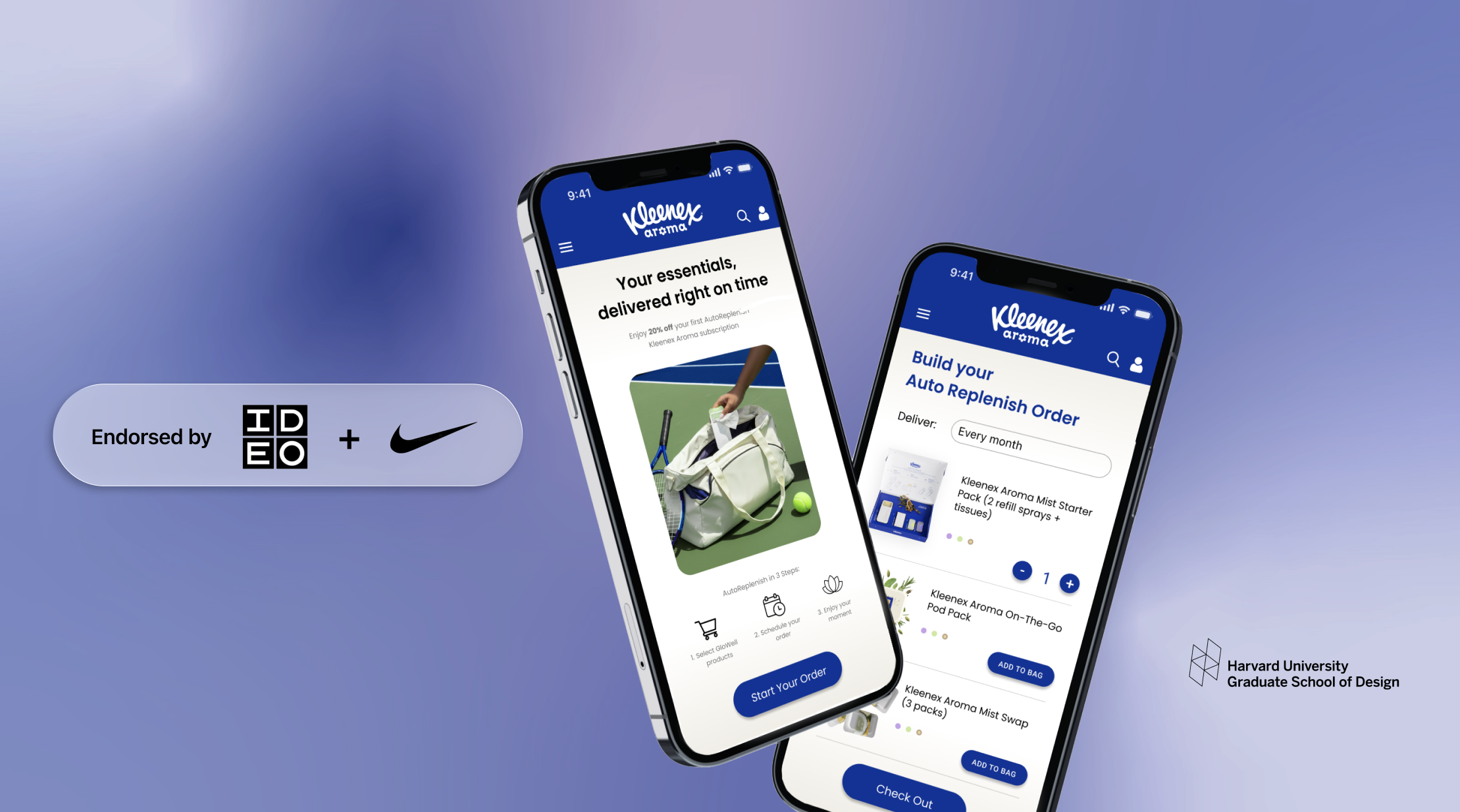
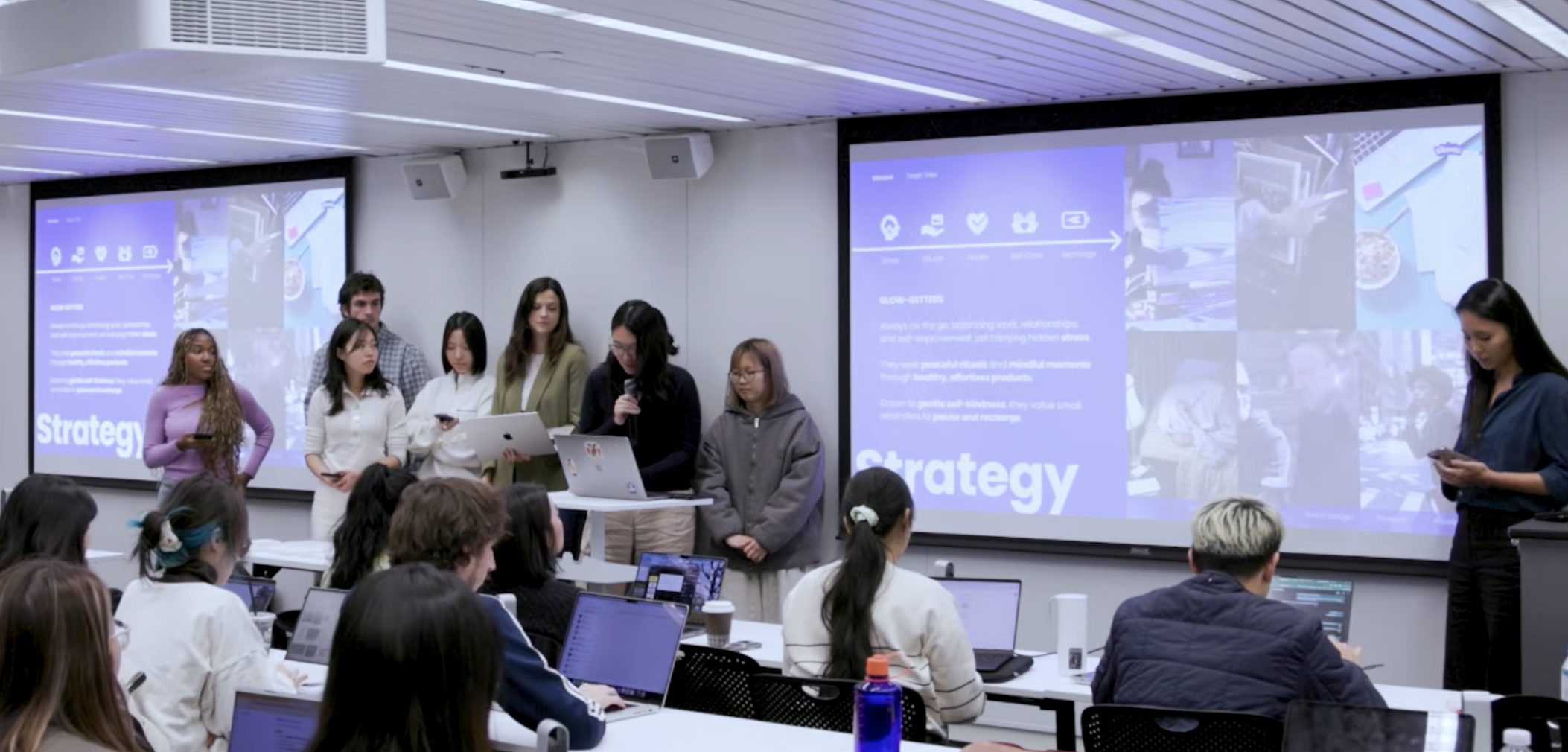
As Project Lead, I coordinated a 11-person team to design Kleenex Aroma, a new product line that helps Kleenex stay competitive after sector divestment in 2025. Backing up this product line is a system of go-to-market strategy, digital interface, and visual assets. I also contributed to UX design, designing a 3-step AutoReplenish subscription interface to drive recurring revenue while securing customer loyalty.
Our project was awarded Distinction by Harvard GSD, and endorsed by IDEO, Nike, and Coca-Cola leadership. We are currently negotiating with Harvard to apply for a patent, so I can’t disclose our full strategy and will only show the interface I designed. For questions about brand strategy, please email me!

My Role:
UX Designer
Project Lead
Timeline:
14 weeks, Fall 2025
Tools:
Figma, Nanobanana AI, Adobe Creative Suite
Collaborators:
Market Research: Lingxia Lu, Haolei Zhang
Pitch: Victoria Bartoszewicz, Xiluva Mbungela
Industrial Design: Alex Limber, Robyn Wang, Jerry Zhang
UX Design: Chloe Ni
2D & 3D Visuals: Leah Bian, Anyang Zu
Leveraging Kleenex’s 100-year legacy, our new product proposal “Kleenex Aroma” (developed around 3 user mindsets) transforms tissues from sick-day necessity to daily wellness ritual.
To support this strategy, I decided to create an online sales platform to expand our product presence beyond physical shelves. Doing so would help drive recurring revenue and strengthen customer loyalty.

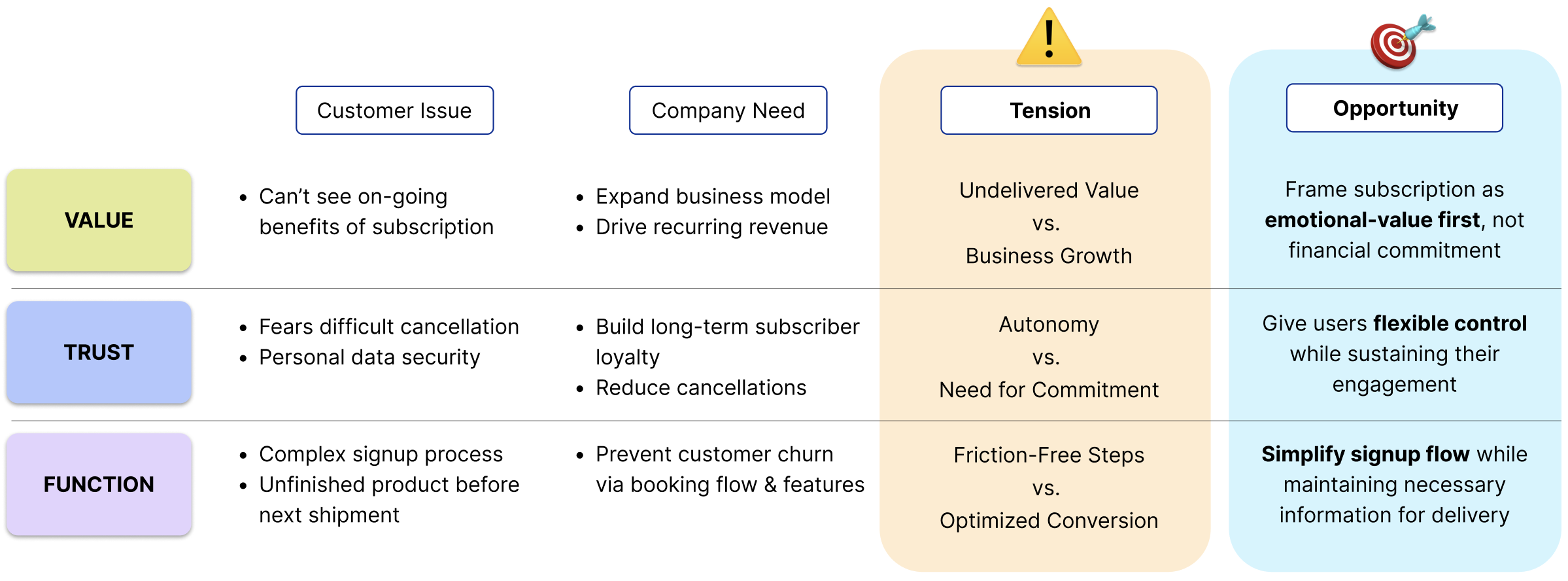
Online subscription models often fail because they feel transactional and unfamiliar to consumers. Companies face challenges like retention, balancing customization with scalability, and evaluating costs. Consumers are reluctant due to subscription fatigue, complex cancellation, and hidden costs.
I conducted secondary research to understand company needs and customer pain points around subscription models. Next, I synthesized the findings into tension and opportunities on 3 levels.
Manage Subscription: Flexibility & Engagement
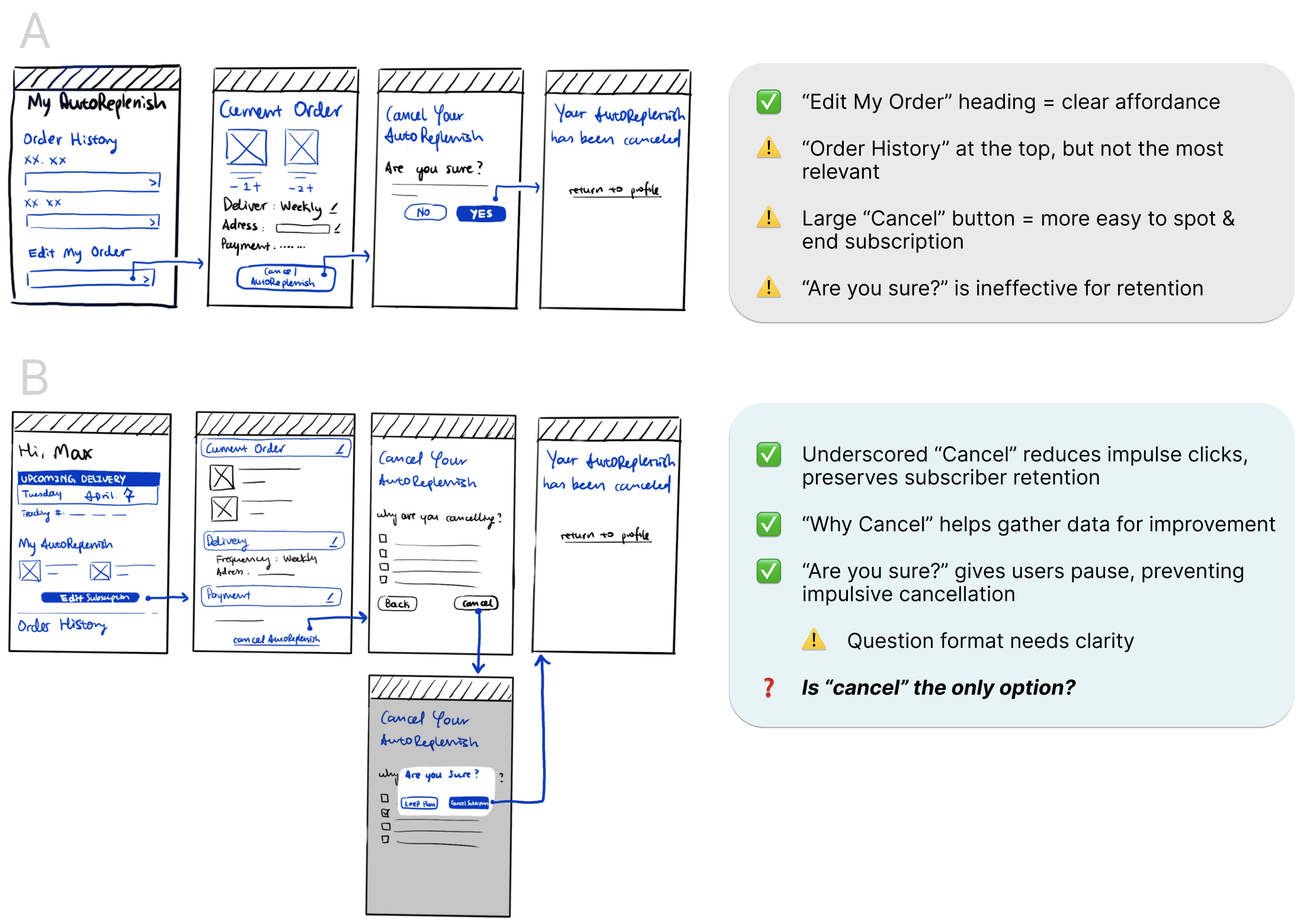
Decision: Clarify action questions, add “Pause Subscription“ option for retention
Incentivize Subscription through Value
Method:
Scoring 3 approaches against criteria
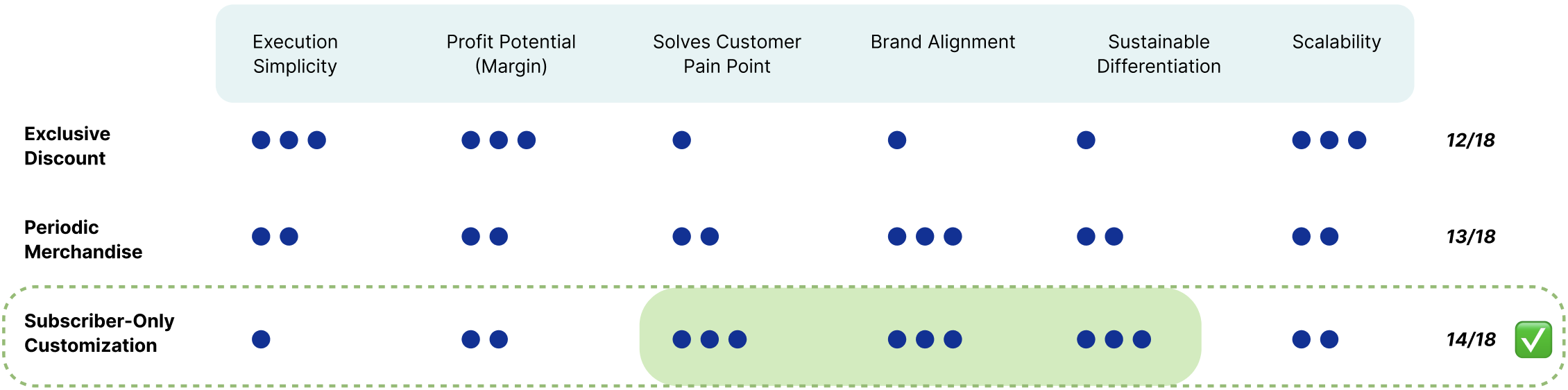
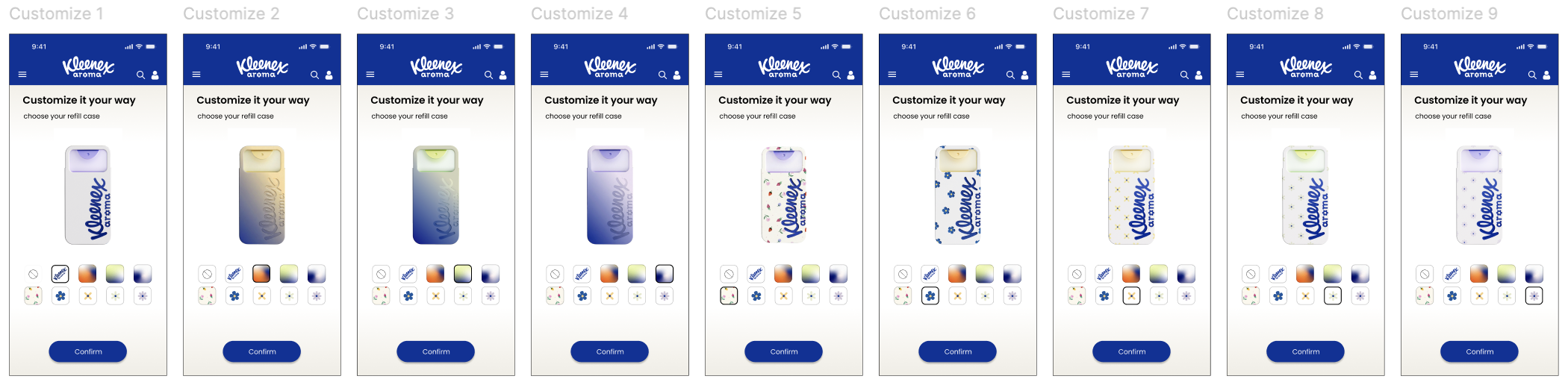
Decision: Implement customization, create emotional value exclusive to subscribers.
Simplify Subscription Steps
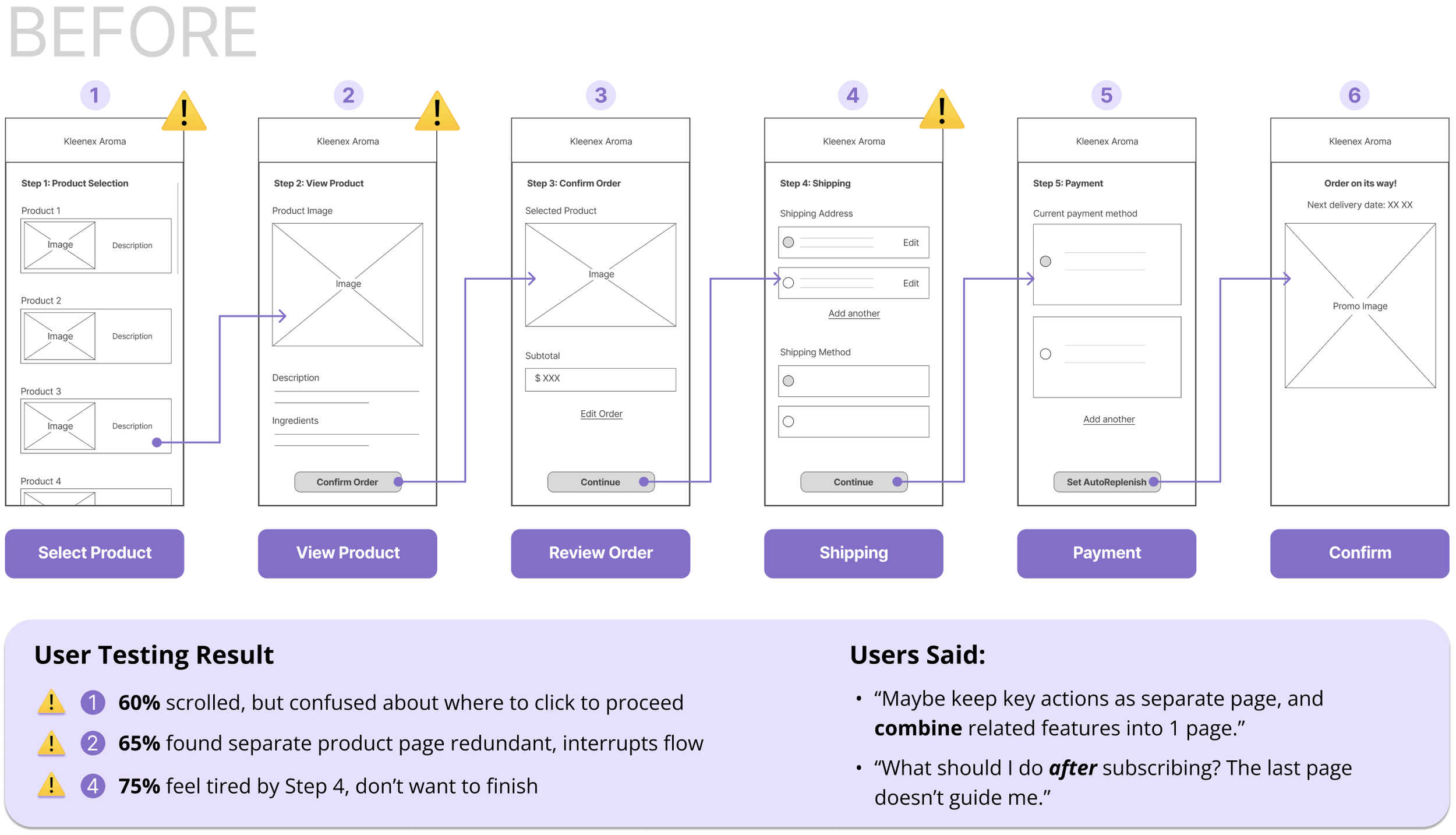
Decision: Condense flow into 3 steps, include related features as secondary to reduce abandonment rate
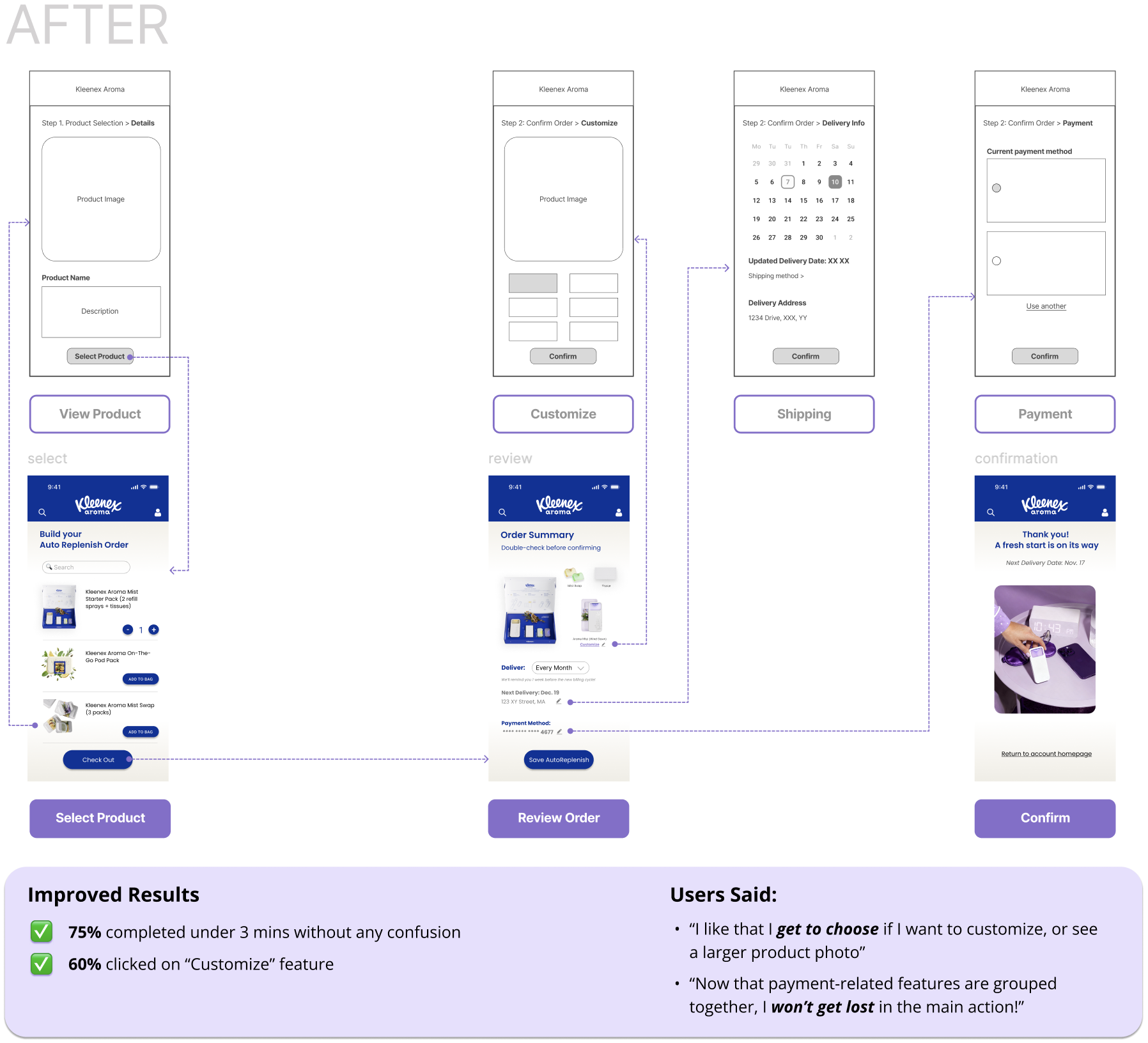
Final Solution
Final Solution
Core Features
A 3-step, web-based booking flow, converting one-time buyers into recurring subscribers via customization and flexibility.
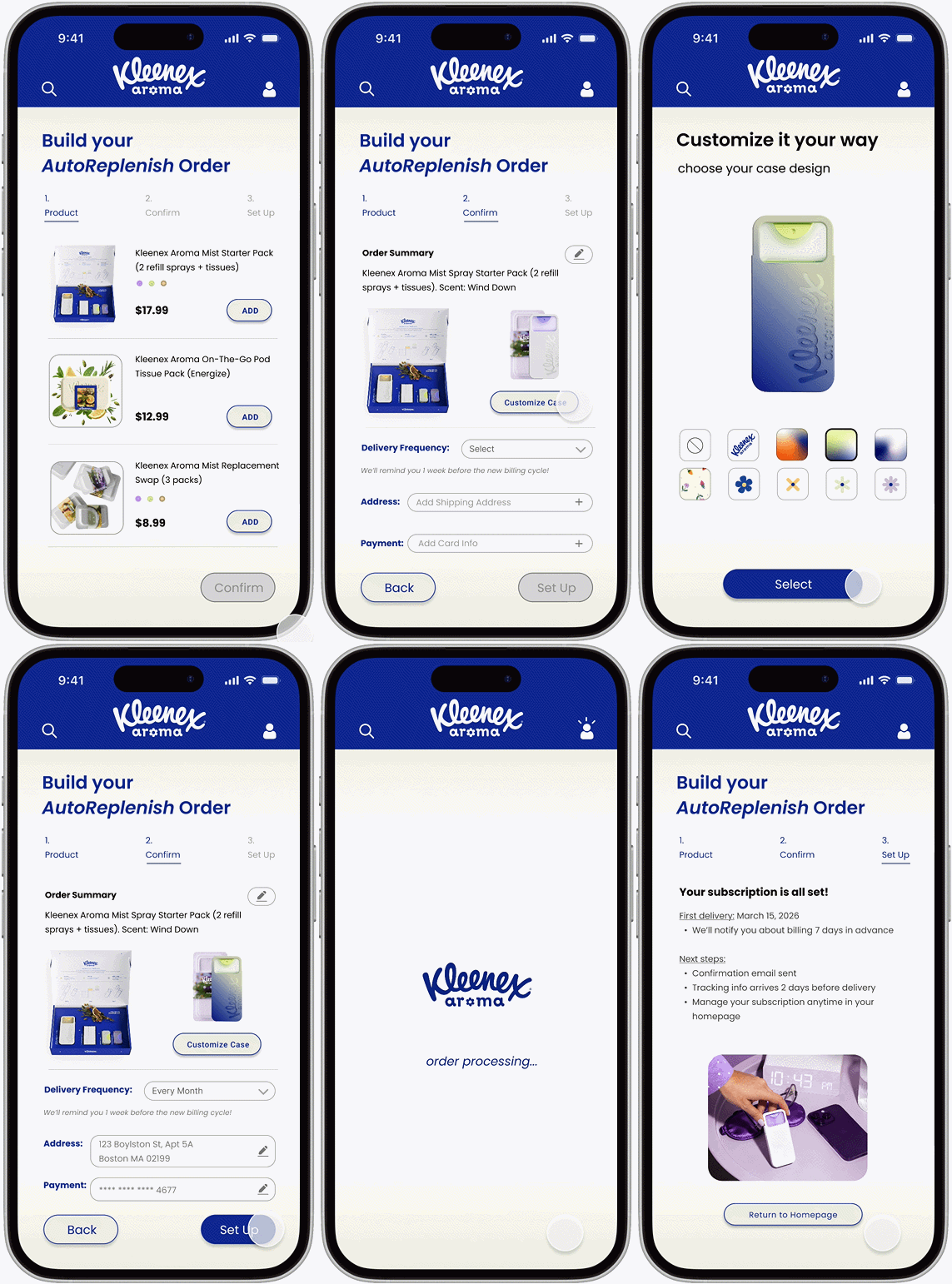
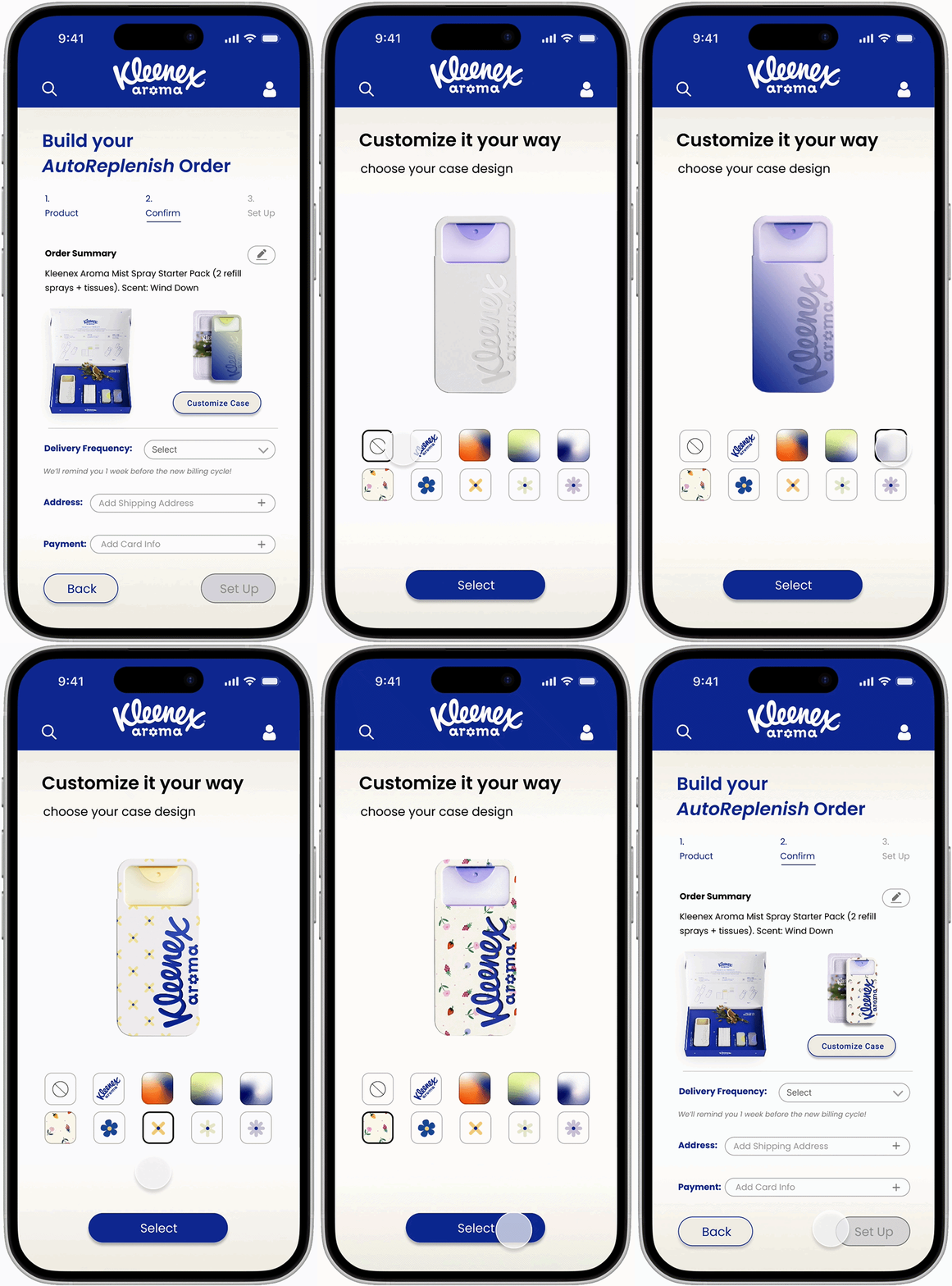
Case Customization: own your routine, choose from 10 exclusive patterns only for online subscribers.
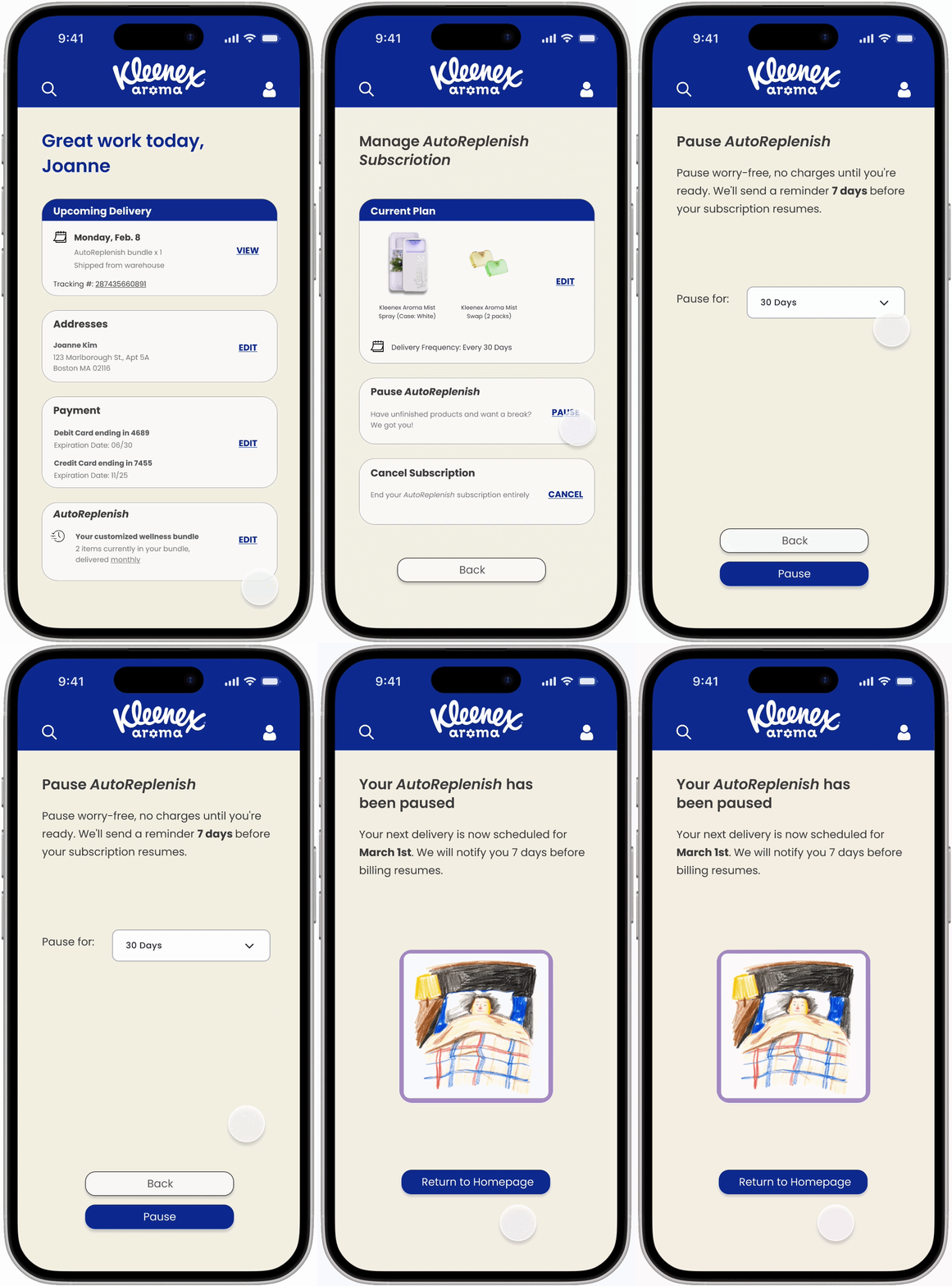
Cancellation Flexibility: cancel your subscription via your homepage.

Pause Subscription: take a break for 30-90 days, not a breakup.
Projected unit economics: $76 annual value per subscriber.
Awarded “Distinction“ out of 4 teams by Harvard GSD faculty.
Received endorsement from design industry leaders @ IDEO, Nike, Coca-Cola.
Question alternatives, not just effectiveness
When stuck, I learned to ask "What other options exist?" instead of "Is the current solution right or wrong?" Iteration unlocked better solutions than defending initial choices.
Balancing is just as important as solving
Balancing user autonomy with business retention taught me to design for both parties simultaneously. Friction and strategic pauses (confirmations, alternatives) protect users from impulsive decisions while preserving company goals.
Leading means creating space, not directing
Being Project Lead of an 11-person team taught me that good collaboration begins with understanding teammates' perspectives and motivations. Trust unlocks innovation. My role was not dictating solutions, but amplifying diverse expertise and emotional security.